
Woodcare Products for Furniture Restoration and Finishing
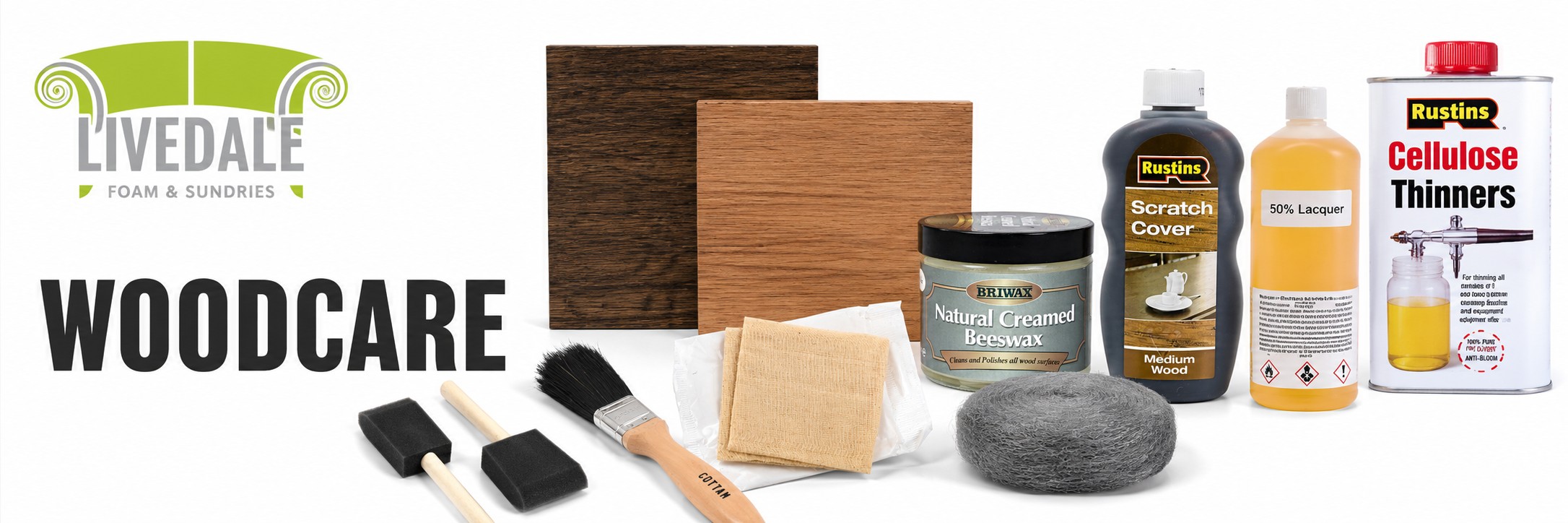
Shop woodcare products for preparing, staining, repairing, polishing and protecting wooden furniture and timber surfaces. Livedale supplies wood stains, oils, polishes, sealers, lacquers, fillers, repair waxes, abrasives, brushes, cloths and specialist finishing sundries for professional furniture restorers, upholsterers, cabinet makers, joiners and experienced DIY customers.
A successful wood finish depends on more than the final coat. The timber must first be cleaned, repaired and prepared correctly. Colour can then be applied where required before the surface is sealed, polished or protected with a compatible finishing product.
Our woodcare range covers each stage of that process, from removing an old coating and sanding the surface to carrying out small colour repairs or completing a traditional polished finish.
Shop Woodcare Products by Application
The Woodcare range is organised into clearly defined categories, helping you find the right products for preparation, application, restoration and final finishing.
Woodcare, Stains and Lacquers
Browse our complete range of woodcare, stains and lacquers for colouring, nourishing, sealing, polishing and protecting suitable timber surfaces.
This section provides access to four more specialised product categories:
- Lacquers
- Wood oils
- Polishes and sealers
- Strippers, thinners and spirits
The right product will depend on the timber, its existing finish, the intended appearance and the amount of protection required.
Wood Oils
Our wood oils include traditional and modern oil finishes for suitable furniture, joinery and timber projects.
The range includes boiled linseed oil, raw linseed oil, Danish oil, teak oil and tung oil. These products differ in their drying behaviour, appearance and intended use, so the individual product instructions should be checked before application.
Oil finishes generally enhance the natural appearance of the grain rather than creating a heavy surface coating. Depending on the product, they may be used to nourish dry timber, refresh an existing oiled finish or provide a protective finish on newly prepared wood.
Different oils are not automatically interchangeable.
Raw linseed oil behaves differently from boiled linseed oil. Danish oil is a formulated finishing product rather than one single natural oil, while teak oil and tung oil each have their own application and maintenance requirements.
Before choosing an oil, consider:
- The species and condition of the timber
- Whether the wood is bare or previously finished
- The intended colour and sheen
- Whether the item will be used indoors or outdoors
- The required drying and recoating time
- Whether the finish may come into contact with food
- The manufacturer’s preparation and maintenance instructions
Always test the oil on a spare piece or inconspicuous area. Oils can deepen the colour of timber considerably, particularly on porous, pale or freshly sanded wood.
Polishes and Sealers
Browse wood polishes and sealers for traditional furniture finishing, surface preparation and restoration work.
The range includes French polish, button polish, garnet polish, heat-resistant pale polish and specialist sealing products.
Traditional shellac-based polishes can be used to create a deep, attractive finish on suitable furniture and interior woodwork. Different polish types vary in colour and appearance, ranging from pale finishes to warmer amber and garnet tones.
Button polish and garnet polish can add noticeable warmth to the wood, while pale polish may be more appropriate where the natural colour of a lighter timber needs to be retained.
French polishing is normally built through a series of controlled applications rather than one heavy coat. Good surface preparation and careful application are essential, as imperfections beneath a clear or polished finish can become more noticeable rather than disappearing.
Sealers are used to prepare or stabilise suitable timber before later finishing stages. They can help control absorption and create a more consistent foundation, but the chosen sealer must be compatible with the stain, polish, lacquer or other finish applied over it.
Check the full finishing system before beginning. A good finish is built in the correct order; it cannot be rescued indefinitely by adding another coat and hoping for the best.
Wood Lacquers
Explore our range of wood lacquers for creating a clear, protective surface finish on suitable furniture, cabinetry and interior timber.
Lacquers are useful where a more defined surface coating is required. Available sheen options may allow the finished appearance to range from lower-sheen to glossier results, depending on the product selected.
Before applying lacquer, the timber should be clean, dry, properly prepared and free from incompatible waxes, oils and contamination.
The chosen stain, sealer, thinner and lacquer must be designed to work together. Combining incompatible finishing products can lead to poor adhesion, wrinkling, clouding, delayed drying or other finish defects.
Follow the manufacturer’s application rate, drying time and recoating instructions. Applying a heavy coat in an attempt to complete the work more quickly can produce runs, trapped solvent or an uneven finish.
Where lacquer is being applied to an existing surface, first establish what finish is already present. A small compatibility test in a concealed area can prevent a much larger and considerably more colourful disaster.
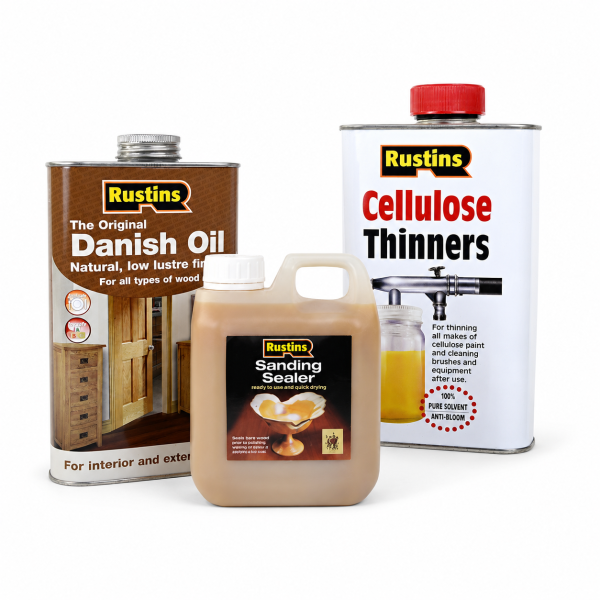
Strippers, Thinners and Spirits
Browse strippers, thinners and spirits for removing old finishes, preparing surfaces, adjusting compatible finishing products and cleaning suitable equipment.
The range includes paint and varnish stripper, cellulose thinners, methylated spirit and specialist thinners.
These products perform different jobs and should not be treated as general-purpose substitutes for one another.
Paint and varnish stripper can help soften or remove compatible old coatings before further preparation. Cellulose thinners are intended for use with suitable cellulose-based products and equipment, while methylated spirit is commonly associated with shellac-based polishing and particular cleaning or preparation tasks.
The product label and safety information should always be read before use. Check:
- The type of coating being removed or diluted
- Compatibility with the timber and surrounding materials
- Whether the product may affect adhesives, veneers or upholstery
- The required ventilation
- Suitable gloves, eye protection and respiratory controls
- Flammability and storage requirements
- Disposal instructions
- Whether a neutralising or cleaning stage is required afterwards
Do not mix solvents, strippers or finishing products unless the manufacturer specifically instructs you to do so.
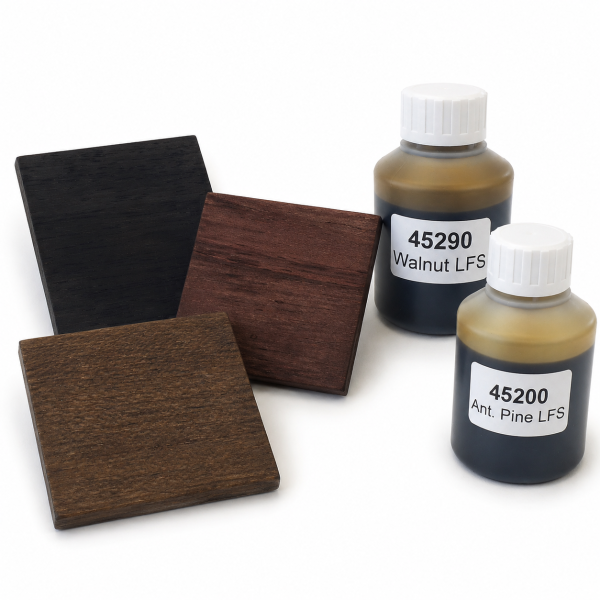
Light Fast Wood Stains
Browse our range of light fast wood stains for colouring bare or properly prepared timber before a compatible protective finish is applied.
The range includes a selection of traditional furniture colours and wood tones, including antique mahogany, antique pine, dark oak, Jacobean and other popular finishing shades.
Wood stain changes the colour of the timber while allowing the grain to remain visible. It is not normally intended to fill defects or provide the final protective surface on its own.
The finished colour can vary according to:
- Timber species
- Natural variation within the wood
- Existing colour and previous treatments
- Sanding grade
- Surface porosity
- Number and strength of applications
- Application method
- The clear finish applied afterwards
Colour charts and product images should therefore be treated as a guide rather than a guaranteed match.
Always test the stain on an offcut or concealed area and allow it to dry fully before judging the colour. The shade may change again when oil, polish, sealer or lacquer is applied over it.
For furniture repairs, staining an entire component can often produce a more consistent result than attempting to colour only one small sanded patch. However, valuable, veneered or historically important furniture may require specialist restoration advice before the original finish is disturbed.
Fillers, Waxes and Touch-Up Repair Products
Explore wood fillers, waxes and touch-up repair products for repairing small defects, refreshing worn finishes and improving the appearance of wooden furniture.
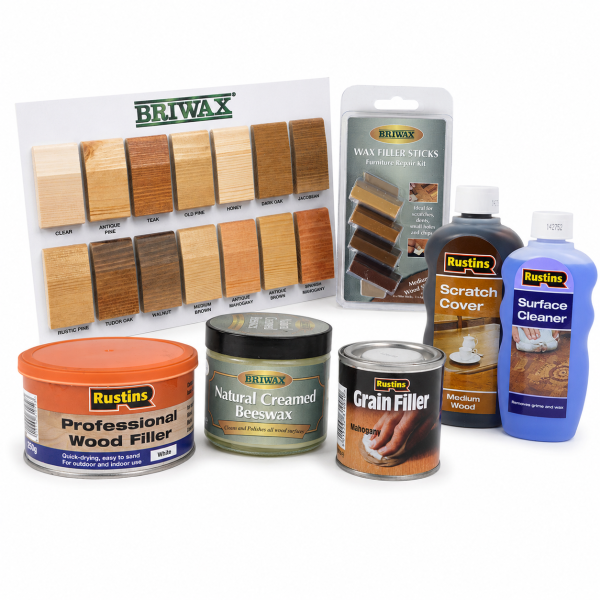
The range includes furniture waxes, beeswax products, wax repair sticks, grain fillers, two-part wood fillers, scratch treatments and finish-reviving products.
These products can help address:
- Small scratches
- Pinholes and minor surface defects
- Shallow dents and chips
- Open grain
- Worn colour
- Dry or tired-looking finishes
- Small areas of missing finish
- Cosmetic damage around furniture edges
Wood Fillers
Wood filler is used to repair suitable holes, cracks and damaged areas before sanding and finishing.
Different fillers have different strengths and working properties. A lightweight cosmetic filler may be suitable for a small pinhole, while a two-part filler may be more appropriate where a stronger repair is needed.
Before applying filler, remove loose material and contamination from the repair. The area should be sound enough to support the product.
Check whether the chosen filler can be stained, painted, polished or lacquered after curing. Some fillers accept stain differently from the surrounding timber and may remain visible beneath a transparent finish.
Where colour matching matters, a test repair is advisable.
Grain Fillers
Open-grained timbers can contain visible pores that remain apparent beneath polished or lacquered finishes.
A compatible grain filler can be used to reduce the appearance of those pores and create a smoother foundation. It is particularly useful where a highly polished or more formal furniture finish is required.
Grain filling is different from repairing a crack or damaged joint. The product is worked into the natural pores of the timber rather than used as a structural repair material.
Excess filler should be removed in accordance with the manufacturer’s instructions before the later finishing stages begin.
Furniture Waxes and Beeswax
Furniture waxes can be used to enrich, protect and buff suitable timber and previously finished furniture.
Clear wax may be preferred where the existing colour should remain largely unchanged. Coloured wax can help deepen the tone or reduce the appearance of light wear, but it should not be expected to disguise major damage.
Apply wax sparingly and evenly. Excess wax can remain soft, attract dirt and make the surface difficult to buff.
Waxed surfaces may also affect the adhesion of later paints, lacquers and other coatings. Where a complete refinish is planned, existing wax contamination may need to be removed before further products are applied.
Wax Repair Sticks and Touch-Up Products
Wax repair sticks and touch-up products provide a practical way to reduce the appearance of small chips, scratches and damaged edges.
Choose a colour that matches the surrounding finish as closely as possible. Where an exact match is unavailable, blending two compatible shades may produce a less obvious repair than using one colour that is clearly too light or too dark.
These products are primarily intended for cosmetic repairs. They should not be used in place of proper structural repair where the timber, joint or veneer is loose or badly damaged.
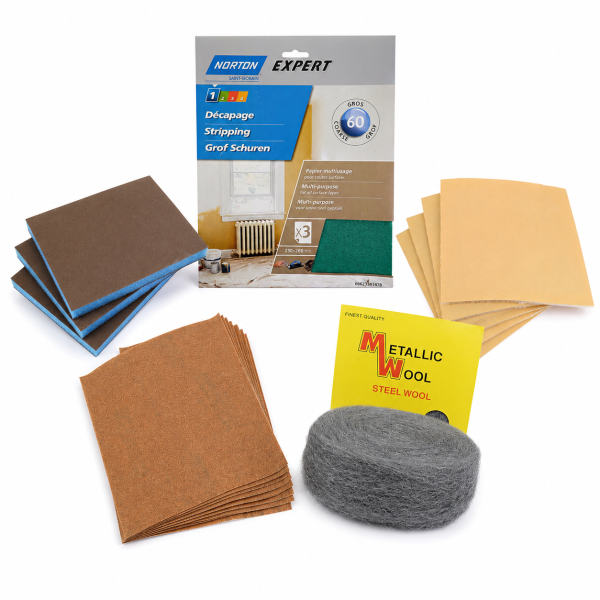
Steel Wool and Abrasives
Browse steel wool and wood abrasives for stripping, smoothing, denibbing and preparing timber between finishing stages.
The range includes wire wool, foam-backed sanding pads, aluminium oxide paper, cabinet-quality glasspaper and flexible abrasive products for flat, shaped and detailed surfaces.
Sanding Papers and Abrasive Pads
Coarser abrasives are used for faster material removal, while finer grades are intended for smoothing, finishing and working between coats.
Begin with the least aggressive abrasive capable of doing the job. Starting unnecessarily coarse can create deep scratches that must then be removed through several further sanding stages.
When changing to a finer grade, sand until the scratches from the previous abrasive have disappeared. Simply touching the surface briefly with a fine paper will not remove deeper marks underneath.
Foam-backed sanding pads are particularly useful on curves, profiles and shaped furniture sections because they can conform more easily to the surface than rigid abrasive paper.
Avoid rounding over sharp edges or sanding through thin veneers. Older furniture and veneered panels may contain far less usable timber at the surface than they appear to.
Steel Wool and Wire Wool
Fine steel wool can be used for denibbing suitable finishes, cutting back between coats and applying or buffing certain traditional woodcare products.
Coarser grades can provide more aggressive cleaning or removal, depending on the application.
The correct grade should be selected carefully. An overly coarse wire wool can scratch timber and damage a finish very quickly.
Remove all loose fibres and residue before applying the next finishing product. Steel particles left behind can contaminate the surface and may cause marks, particularly where moisture or water-based products are involved.
Woodcare Brushes
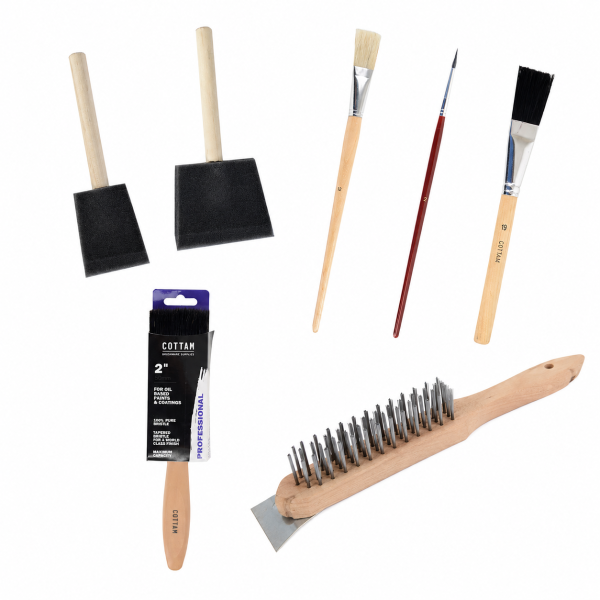
Choose from our range of woodcare brushes for applying stains, oils, polishes, spirit-based products, paints and suitable wood finishes.
The selection includes foam brushes, touch-up brushes, flat and round fitch brushes, varnish brushes, spirit brushes and wire brushes.
Different brush shapes provide different levels of coverage and control.
Flat brushes are useful across broader furniture panels and straight sections. Round and detail brushes can help around carvings, mouldings, corners and shaped frame components. Small touch-up brushes provide more control where only a limited area needs attention.
Foam brushes can produce a smooth application with some products, but they are not suitable for every solvent or finish. Check compatibility before use, as certain products can soften or damage an unsuitable foam applicator.
A wire brush is an abrasive preparation tool rather than a finishing brush. It can be used for appropriate cleaning and surface work but may leave strong marks on softer timbers.
Clean reusable brushes using the method and cleaning product recommended for the finish. Allowing polish, lacquer or oil to harden within the bristles is a dependable way of turning a perfectly good brush into a rather expensive stick.
Woodcare Cloths and Sundries
Browse woodcare cloths and sundries for surface preparation, mixing, wiping, staining, oiling and polishing.
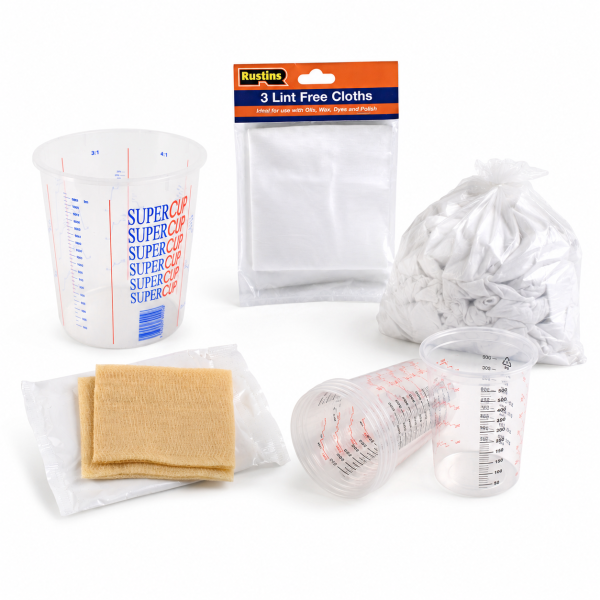
The range includes tack rags, lint-free cloths, preparation cloths, cotton wiping rags and mixing cups.
Tack Rags and Preparation Cloths
Dust left on the surface can become trapped beneath stain, polish or lacquer and spoil an otherwise carefully prepared finish.
Tack rags help lift fine dust and loose particles immediately before finishing. Use them gently rather than pressing heavily enough to leave residue on the wood.
Preparation cloths can be used during cleaning and between appropriate finishing stages. The surface should be inspected under good lighting before the next coat is applied.
Lint-Free and Cotton Cloths
Lint-free cloths are useful for applying and buffing suitable oils, waxes and polishes without leaving obvious loose fibres behind.
Cotton rags are practical for general wiping and cleaning, provided they are clean and appropriate for the product being used.
Some oil-contaminated cloths can present a fire risk if discarded incorrectly. Always follow the finish manufacturer’s instructions for handling and disposing of used application cloths.
Mixing Cups
Mixing cups provide a clean container for measuring, decanting or preparing compatible woodcare products.
Use a separate, clean container for each material and do not return contaminated or mixed product to the original tin.
Where a product requires a hardener, catalyst or specific mixing ratio, follow the manufacturer’s measurement and working-time instructions precisely. Guessing the ratio by eye is rarely the traditional craftsmanship people imagine it to be.
Plan a Wood Finishing Project from Start to Finish
A logical working order helps prevent incompatible products, unnecessary rework and disappointing colour results.
A typical project may involve:
- Identifying the timber and existing finish
- Removing loose or unsuitable old coatings
- Repairing damage and filling defects
- Sanding and preparing the surface
- Removing all dust and contamination
- Testing the stain or chosen finish
- Applying colour where required
- Applying a compatible sealer, oil, polish or lacquer
- Allowing the correct drying or curing time
- Cutting back, buffing or applying further coats as instructed
Not every project requires every stage. A lightly worn waxed table may only need careful cleaning and re-waxing, while a damaged lacquered frame may require stripping, repairing, colouring and completely refinishing.
Identifying an Existing Wood Finish
Before applying a new woodcare product, try to establish what is already on the furniture.
Common finishes include:
- Wax
- Oil
- Shellac or French polish
- Lacquer
- Varnish
- Paint
- Modern sealed or factory-applied coatings
Applying a new finish over an unidentified surface can lead to poor adhesion or an uneven appearance. Wax and silicone contamination are particularly troublesome beneath many later coatings.
Where the existing finish cannot be identified confidently, test the proposed preparation and finishing method on a concealed area first.
Valuable antiques, fine veneers and furniture with historical finishes should be assessed carefully before stripping. Removing the original finish can reduce both character and value.
Choosing the Correct Woodcare Product
Before ordering, consider:
- Whether the timber is bare, stained or previously finished
- Whether the work is a minor repair or complete refinish
- The required colour
- The preferred sheen
- The level of wear the surface will receive
- Whether the item will be kept indoors or outdoors
- Compatibility between preparation and finishing products
- Application and drying conditions
- Future cleaning and maintenance requirements
No finish is universally correct for every piece of timber.
An oil may suit a natural, easily maintained finish. Wax can provide a traditional appearance on appropriate furniture. French polish can create depth and character, while lacquer may provide a more defined and durable surface coating.
The best choice is the product that suits the timber, intended use and existing finishing system.
Test Colour and Compatibility Before Application
Wood is a natural material, and two sections described as the same species can absorb stain differently.
Always test stains, oils, waxes and coloured repair products before applying them across a visible surface.
A useful test should include the full proposed finishing system rather than the stain alone. A clear oil, polish or lacquer can significantly deepen the colour and change the final sheen.
Allow the test area to dry properly before assessing it. Wet stain often appears darker than the final dried colour, while a later clear coat may darken it again.
Woodcare Safety and Workshop Preparation
Read the product label, application instructions and current safety data before using stains, oils, lacquers, solvents, strippers or other finishing materials.
Work in a suitably ventilated area and keep products away from heat, sparks, flames and other ignition sources where instructed. Wear the protective equipment specified for the product and task.
Sanding can produce fine wood dust. Use suitable dust extraction and respiratory controls rather than relying on an open door and optimism.
Keep containers closed when not in use and store products according to their labels. Do not transfer chemicals into unmarked food or drink containers.
Used cloths, abrasive materials and residues should be handled and disposed of in accordance with the manufacturer’s guidance and applicable local requirements.
Related Furniture and Workshop Supplies
Woodcare products are often used alongside other furniture-making and upholstery materials.
Browse our wooden furniture feet for replacement legs and feet that can be stained or finished to complement suitable furniture.
Explore our professional upholstery tools for measuring, cutting, stripping and general workshop equipment.
Our workroom supplies include adhesives, cleaners, fixings, protective packaging and other practical furniture-making sundries.
For reupholstery projects involving both the timber frame and soft furnishings, browse our ranges of upholstery springs and webbing, staples and tacks and foams and fillings.
Trade Woodcare Products
Livedale supplies wood stains, furniture polishes, oils, lacquers, fillers, abrasives and related woodcare products to professional upholsterers, furniture restorers, cabinet makers, joiners, repair workshops and other trade customers throughout the UK.
Approved trade customers can access preferential trade pricing across eligible products after registering for a trade account.
Browse the Woodcare categories above to find the preparation, repair and finishing products required for your next furniture or timber project.