
Upholstery Needles, Pins and Skewers
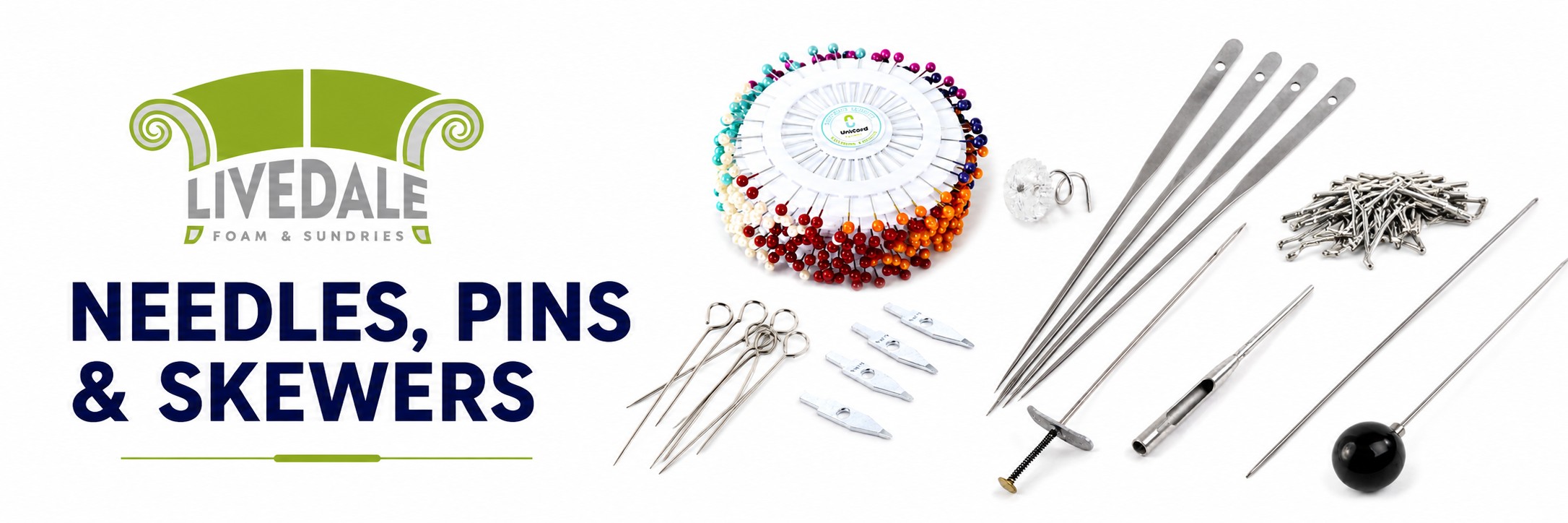
Shop specialist needles, pins and skewers for traditional upholstery, furniture repair, cushion making, hand sewing, deep buttoning and soft furnishings. Livedale supplies straight and curved sewing needles, long buttoning and tufting needles, regulator needles, dressmaker’s pins, twist pins, pearl-head pins and upholstery skewers.
The correct tool depends on the job being carried out.
Use this category to choose between:
- Buttoning Needles for deep buttoning, tufting and suitable fastening systems
- Curved Needles for hand sewing where access is restricted or the needle must return through the same face
- Pins & Skewers for temporary positioning, fabric alignment and holding suitable upholstery layers
- Regulator Needles for shaping and redistributing traditional upholstery fillings
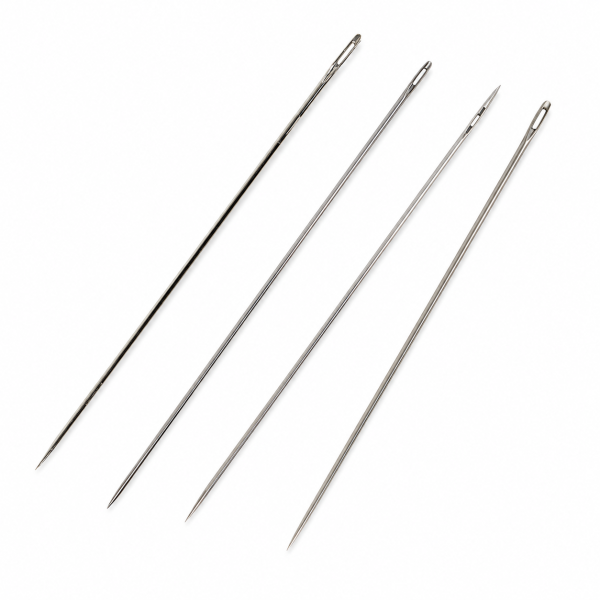
- Straight Needles for direct hand stitching, long passes through upholstery and bolster work
Needle length, point type, curve, thickness and eye size should be selected according to the materials, access and thread being used.
A needle designed for buttoning, regulating or leather work should not be treated as an interchangeable general-purpose sewing needle.
Shop Upholstery Needles by Application
Buttoning Needles
Browse Buttoning Needles for specialist tools used to pass buttoning twine, tapes, clasps or other compatible fastenings through deep upholstery constructions.
The live range includes:
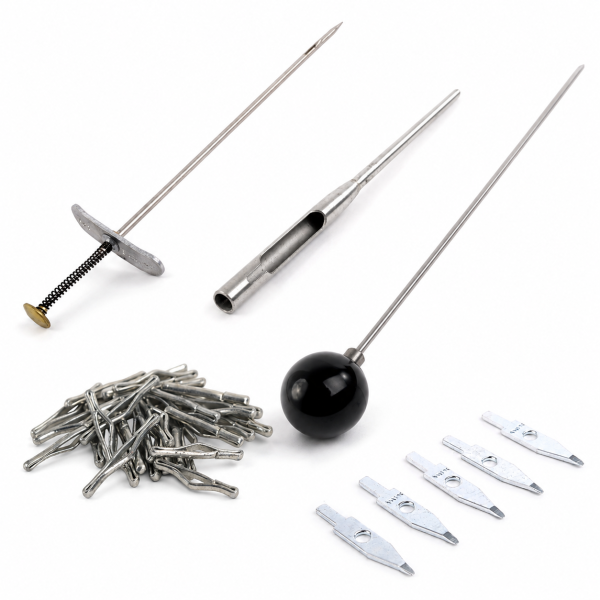
- Cavity-ejector needles in 12″ and 15″ lengths
- C.S. Osborne tufting needle
- Matching tufting clasps
- Metal arrowheads
- Arrowhead presser tool
These products may be used in suitable:
- Deep-buttoned chairs
- Sofas and settees
- Upholstered headboards
- Footstools and ottomans
- Mattress-style buttoning
- Removable back cushions
- Decorative tufting
The correct needle depends on:
- Upholstery depth
- Buttoning or fastening system
- Access from the rear
- Twine or tape type
- Cushion or furniture construction
- Required anchor
Buttoning needles are designed to pass through comparatively deep layers of foam, filling and covering material.
Browse Buttoning Parts & Equipment for buttons, backs, dies and associated furniture-button components.
Browse Upholstery Twines for suitable nylon buttoning twine and traditional hand-upholstery threads.
Curved Upholstery Needles
Browse Curved Needles where a straight needle cannot be passed conveniently through the work.
The range includes:
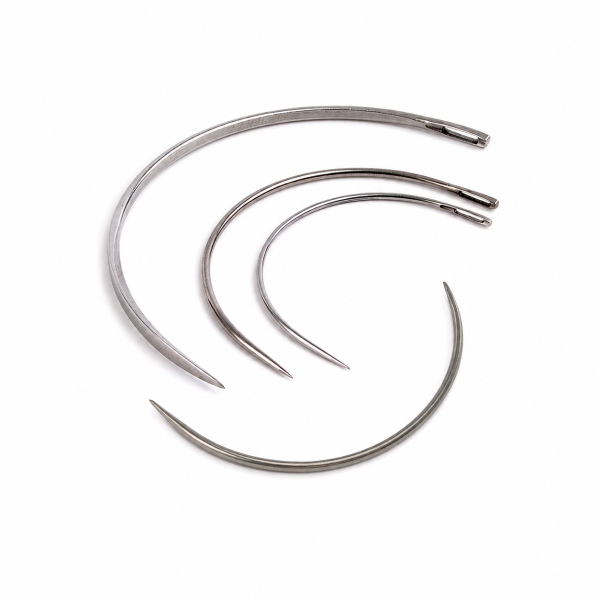
- C.S. Osborne N501 light upholstery needles
- C.S. Osborne N501X extra-light needles
- C.S. Osborne N553 leather-point needles
- General curved needles in packs of ten
Curved needles are useful where the point must enter and return through the same side of the upholstery.
Potential applications include:
- Slip stitching
- Closing cushion seams
- Sewing around furniture frames
- Working on outside arms and backs
- Blind stitching
- Traditional edge stitching
- Sewing suitable springs to hessian
- Hand stitching leather and heavier coverings with an appropriate point
The amount of curve affects the path of the stitch.
A tighter curve may be useful in a restricted area, while a longer, shallower curve can suit broader furniture edges.
Choose a needle eye large enough for the selected thread without forcing it.
For hand-closing seams, browse Waxed Polyester Slipping Thread and Upholstery Twines.
Upholstery Pins and Skewers
Browse Pins & Skewers for temporary positioning and alignment during furniture-cover preparation and upholstery work.
The current range includes:
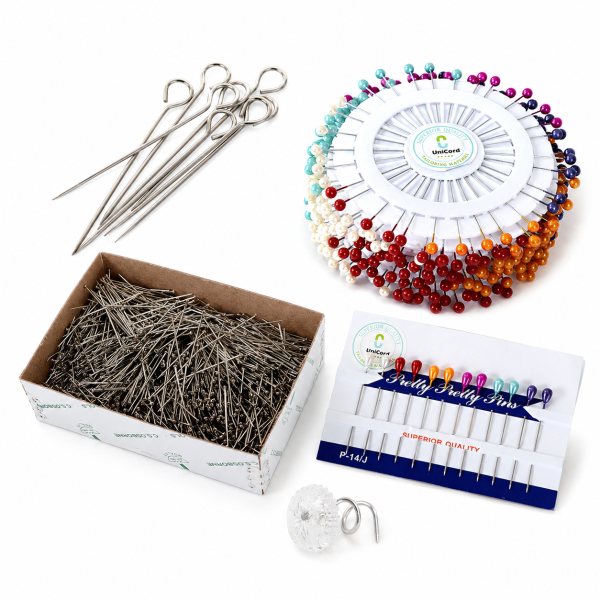
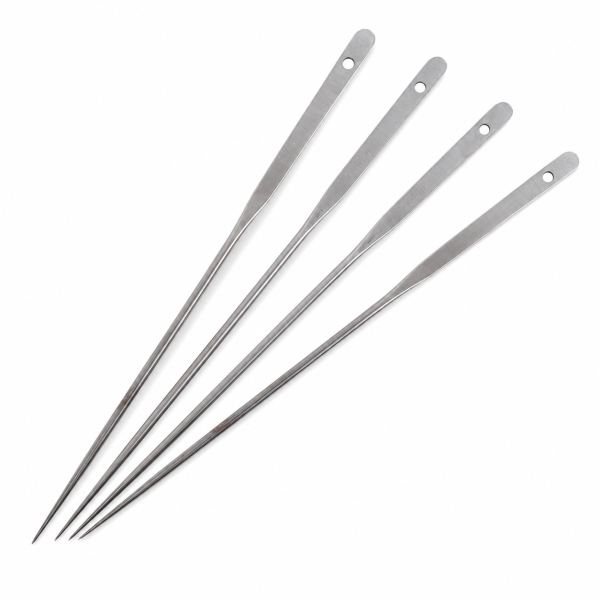
- 4″ upholstery skewers
- C.S. Osborne dressmaker’s pins in 1¼″ and 1½″ lengths
- C.S. Osborne twist pins
- Pearl-head pins in card and wheel formats
Pins may be used to:
- Hold fabric panels before sewing
- Match patterns and stripes
- Position pleats
- Temporarily retain loose-cover sections
- Mark reference points
- Hold suitable layers during fitting
- Check a layout before permanent fixing
Upholstery skewers can be used to hold or position suitable fabric and filling layers temporarily while the shape or alignment is checked.
Twist pins are designed for applications where a rotating fixing action is appropriate. They should not be confused with ordinary straight dressmaker’s pins.
Always remove temporary pins and skewers before the furniture or cushion is completed and delivered.
Browse Upholstery Vinyl & Fabric for furniture-covering materials and Measuring & Marking Tools for preparing accurate layouts.
Regulator Needles
Browse Regulator Needles for tools used to shape and redistribute suitable upholstery fillings.
The range includes:
- C.S. Osborne N306.5 regulator needles
- A clearance 8″ version
- Heavy 10″ regulator needle
- Heavy 12″ regulator needle
Regulator needles are used principally to manipulate filling rather than to carry sewing thread.
Potential applications include:
- Arranging hair and coir
- Redistributing filling beneath hessian
- Shaping traditional stitched edges
- Smoothing uneven areas
- Lifting filling into corners
- Refining seat, arm and back profiles
The pointed end enters the upholstery construction and allows suitable filling to be moved without opening the complete section.
Choose the length according to the depth of the upholstery and the distance the tool must reach.
A heavier regulator may suit denser traditional filling, while a lighter tool may offer more control for finer adjustment.
Browse:
Regulators are sharp tools and should be used carefully to avoid puncturing the finished covering or injuring the supporting hand.
Straight Upholstery Needles
Browse Straight Needles for direct hand stitching and long passes through suitable upholstery constructions.
The live range includes:
- C.S. Osborne N504 single-point needles
- C.S. Osborne N505 double-point needles
- C.S. Osborne N554 24″ bolster needle
- Double-point buttoning needles
- Single round-point needles
Straight needles may be used for suitable:
- General hand upholstery
- Mattress and bolster work
- Blind stitching
- Passing thread through deep cushions
- Sewing suitable filling and hessian
- Buttoning
- Closing accessible furniture seams
Single-point needles are threaded and driven from one end in the conventional manner.
Double-point needles allow the tool to be worked from either end during suitable upholstery and buttoning operations.
Long bolster needles are designed to pass through deep cushions, bolsters and comparable padded sections.
Select the length carefully. A needle that is unnecessarily long may be awkward to control, while one that is too short may not pass through the complete upholstery construction.
Choosing the Correct Upholstery Needle
Consider five main features:
Needle length
The needle must reach through the intended upholstery depth without being excessively difficult to control.
Needle shape
Choose:
- Straight for direct access
- Curved for restricted access or return stitching
- Long buttoning needles for deep upholstery
- Regulators for manipulating filling
Point type
A conventional upholstery point may suit fabric, hessian and filling work.
A leather point is designed for suitable leather and comparable materials but may cut woven fabric differently from a conventional point.
Needle thickness
Heavier needles provide more rigidity but create larger holes and may be harder to pass through dense layers.
Eye size
The eye must accept the selected thread or twine without excessive forcing or abrasion.
Before beginning the finished work, test the combination of:
- Needle
- Thread or twine
- Fabric
- Hessian
- Filling
- Upholstery depth
Needles for Traditional Upholstery
Traditional furniture work may use several needle types during one project.
For example:
- A regulator needle arranges hair or coir
- A curved needle forms and secures a stitched edge
- A heavier straight or curved needle sews springs to hessian
- A slipping needle closes the finished fabric seam
- A buttoning needle passes twine through the completed upholstery
Browse Traditional Upholstery Twines for linen and flax stitching twine, laidcord, buttoning twine and slipping thread.
Browse Double-Cone Upholstery Springs where the furniture uses a traditional sprung foundation.
Needles for Cushion Making
Cushion-making may require:
- Pins for aligning fabric panels
- Curved needles for hand-closing seams
- Straight needles for accessible hand stitching
- Buttoning needles for tufted cushions
- Bolster needles for deep or cylindrical interiors
Browse:
- Foam Cut to Size
- Upholstery Fabric & Vinyl
- Upholstery Piping Cords
- Upholstery Zips, Zip Chain & Sliders
Pins and hand-sewing needles support the cover-making process, but machine construction seams normally require products from Upholstery Sewing Threads & Bobbins.
Working with Upholstery Fabric
Different covering materials place different demands on needles and pins.
Consider:
- Fabric thickness
- Weave
- Stretch
- Pile
- Back coating
- Leather or vinyl surface
- Whether puncture holes remain visible
- Number of layers
- Thread thickness
Fine or loosely woven fabrics can be damaged by an unnecessarily heavy needle.
Vinyl and leather retain permanent puncture holes, so repeated repositioning should be avoided.
Test the needle or pin on an offcut where the material is unfamiliar.
Care and Storage
Store needles, pins and skewers in a dry, secure container.
Keep different lengths and types separated and clearly labelled.
Before use, check for:
- Bent shafts
- Blunt or damaged points
- Rust
- Rough needle eyes
- Cracks
- Loose heads on pins
- Damaged clasps or ejector mechanisms
A bent needle should not be forced straight and returned to demanding work. Damaged metal can fail unexpectedly.
Wipe tools clean after use and keep them away from damp materials and adhesive overspray.
Safe Handling
Needles, pins, arrowheads and skewers are sharp.
Keep them out of the reach of children and store them safely when not in use.
Avoid:
- Leaving needles within furniture or cushions
- Holding a supporting hand directly in the needle path
- Carrying unprotected needles in clothing
- Forcing a needle through an obstruction
- Using a bent or rusty tool
- Placing loose pins on the floor or workbench edge
- Mixing broken needles with ordinary waste
- Delivering furniture before checking that temporary pins and skewers have been removed
Count pins and skewers where practical when fitting large loose covers or working across several furniture sections.
Related Upholstery Tools and Materials
The main child categories are:
Other closely associated ranges include:
- Upholstery Twines
- Buttoning Parts & Equipment
- Hair & Coir Fillings
- Upholstery Hessian
- Upholstery Fabric & Vinyl
Return to the Upholstery Tools hub for cutting, measuring, pneumatic, stripping and other furniture-workshop tools.
Trade Upholstery Needles, Pins and Skewers
Livedale supplies upholstery needles, pins and skewers to professional upholsterers, furniture manufacturers, restorers, cushion makers, automotive trimmers and training workshops throughout the UK.
The range covers temporary fabric positioning, traditional filling work, hand sewing, cushion closing, deep buttoning and specialist tufting systems.
Approved trade customers can access preferential pricing across eligible products after registering for a trade account.
Choose the tool according to the required depth, access, material, point type and thread or fastening system.